

Comprehensive Surface Treatment Technology

Surface Treatment for Low Light Reflective Optical Parts and Ai Magnesium Glasses

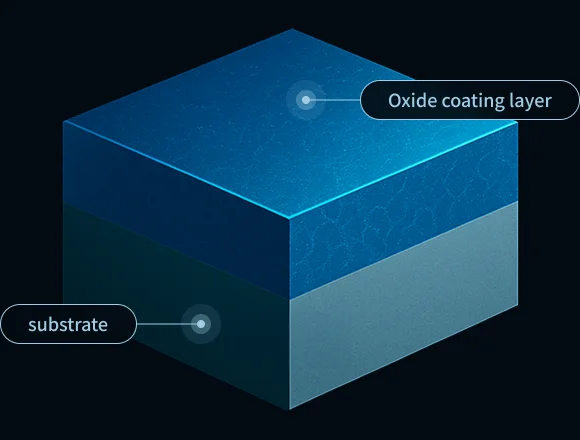
Using MAO micro‑arc oxidation, a metal‑ceramic composite coating grows on the surface of aluminum / magnesium / titanium alloys, solving six major problems — wear resistance, corrosion resistance, insulation, thermal shock resistance, appearance coloring, and low friction / medium resistance — in one process. This extends service life and greatly increases reliability for aerospace, 3C, and industrial components.

What is MAO/MPC/PEO Micro‑Arc Oxidation?

By applying high-voltage pulses in an electrolyte, micro-plasma discharges convert the substrate surface into a dense ceramic-like oxide layer. The coating is metallurgically bonded to the metal base, with high adhesion, controllable porosity, and can be further sealed or over-coated for additional functionality.

Applicable materials & coating ranges

  • Materials: aluminum alloys, magnesium alloys, titanium alloys; can also be used for carbon steel, copper alloys under special conditions.
  • Coating thickness: 10–300 μm (customized per material / function)
  • Typical hardness (HV): Al: 900–1600, Mg: 450–800, Ti: 600–1500; for steel/copper often 500–1000
  • Insulation: resistance ≥ 25V/μm; with high-insulation coating, withstand up to 90V/μm ( Dual channel process)
  • Salt spray resistance: depending on material and sealing/over‑coating, usually achieves >>500 hours; typically 500–2000 h or more.

Six Key Functions & Customer Benefits

Ultra-Hard & Wear-Resistant (Hardening)

  • Metal-ceramic composite structure greatly increases surface hardness; scratch- and wear-resistant

  • Improves part dimensional stability and lifespan; reduces maintenance and downtime costs

  • Typical hardness: Aluminum 900–2000 HV, Magnesium 450–800 HV, Titanium 600–1500 HV

Long-Term Corrosion Protection

  • Dense, chemically stable coating; with sealing/overcoat, provides extended salt spray and chemical resistance

  • Neutral salt spray tests can increase from traditional coating 360 h to 2000 h (depending on material/structure)

  • Suitable for aluminum/magnesium die-cast parts, parts with multiple holes, or harsh environments

High Insulation Protection

  • High resistivity and high-voltage breakdown resistance; suitable for high-voltage battery housings, busbars, and insulating structural parts

  • 40 µm high-insulation coating withstands ~1000 V DC; 90 µm withstands ~3000–4000 V

  • Reduces breakdown risk and improves system safety margin

Thermal Protection / Thermal Shock Resistance

  • Low thermal conductivity and excellent thermal shock resistance; suitable for 150–1000 °C high-temperature or thermal-cycling environments

  • Example: aluminum coatings withstand hundreds to over 1600 thermal shock cycles; titanium coatings reach hundreds of cycles

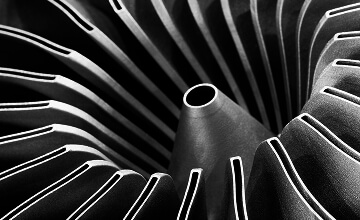
  • Applicable to blades, nozzles, heat-dissipation / insulation structures, or high-speed airflow components

In-Situ Coloring & Optical Appearance

  • Forms stable white/black/gray coatings during processing; customizable multi-color options available

  • Black MAO coating is more stable under UV/heat than conventional black anodizing; Low reflective optical rate (95%)

  • Combines appearance, heat-radiation management, and protection; suitable for 3C and aerospace exterior parts

Low Friction / Chemical-Resistant Coatings (Composite Coating)

  • Functional 2–20 µm topcoat applied over MAO base layer for low friction and media resistance

  • Key metrics: indentation adhesion HF1–2, critical scratch load ≥ 30 N, hardness ≥ 12 GPa, friction coefficient < 0.12, wear rate reduced ≥ 50%, Ra<0.6μm

  • Suitable for pumps, valves, shafts/seals, and moving parts in water, seawater, or acidic/alkaline environments

Typical Industries & Parts

Aerospace

Structural parts, insulation/heat‑dissipation parts, conductive & insulating components

3C / Consumer electronics

Exterior parts, heat sinks/dissipation parts

New energy vehicles & energy storage

Battery housings, busbars, cooling/insulating parts

Mechanical & fluid systems

Pumps/valves, shafts / shaft‑seals, offshore / marine devices

Service Flow | Customized Development

01

Define requirements

Material, dimensions, operating environment, target indicators (e.g. hardness, salt‑spray hours, breakdown voltage).
02

Sample plan

Decide electrolyte system and process parameters; optionally include sealing/over‑coating for composite treatment.
03

Performance verification

Conduct salt‑spray / voltage / wear / thermal‑shock tests and provide test reports.
04

Mass‑production implementation

Design fixtures & processes, quality control and traceability.
Indicator Typical Level Remarks
Coating Thickness 10–300 μm Customized by function
Hardness (HV) Al 900–1600; Mg 450–800; Ti 600–1500 Varies with material
Salt Spray 500–2000 h+ Related to sealing/ coverage/ structure
Dielectric Strength 40 μm ≈ 1000 V;90 μm ≈ 3000–4000 V Leakage current set at 3.0 mA
Friction Coefficient < 0.12 Composite thin film
Etch Resistance 5-10 times better than the anode <0.1mA (depends on thickness)
※The above data represent typical values for posters and samples; actual performance may vary depending on the material, shape, and operating conditions, with the final reference being the test report.
CONTACT

Contact Us

RayMag Technology Inc.|MAO/PEO Surface Treatment Services for aluminum, magnesium, and titanium alloys|We offer prototyping, small-batch trials, and mass production solutions|Please provide drawings and requirement specifications, and we will respond with prototyping suggestions within 3–5 business days.